Seizures and Dementia
Could seizures be an early sign of dementia?
In Alzheimer’s disease the brain becomes hyperexcitable long before memory fails. Seizures may be one of the earliest signs of that process, a harbinger of neurodegeneration rather than a late complication. We use big data to test this idea, and to ask a bolder question, could calming that hyperexcitability help protect the brain?
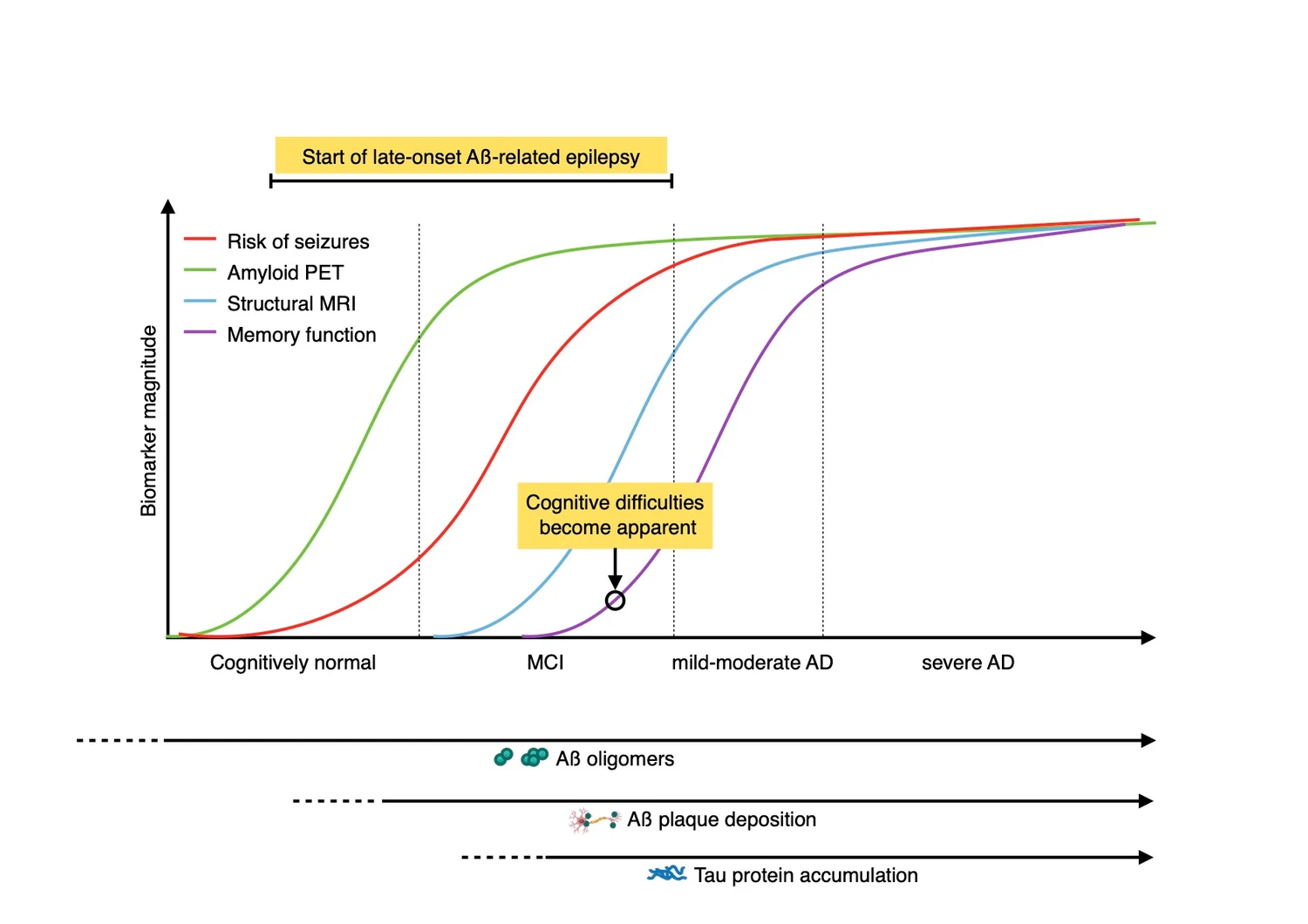
Hyperexcitability, and a vicious cycle.
Hyperexcitability looks like an early, initiating feature of Alzheimer’s, not a late side effect. Soluble amyloid makes neurons fire too much, and that excess activity itself drives more amyloid release, a self-reinforcing loop that may accelerate the disease.
Seizures in Alzheimer’s are already linked to earlier onset, faster decline, and more amyloid and tau.
Breaking the cycle, what the data suggest.
Using some of the world’s largest health datasets and causal-inference methods, we are testing whether reducing hyperexcitability changes the course of dementia. This work is early and fast-moving, but the first signals are striking and point the same way.
Sodium channel blocking ASMs were linked to a 27% lower risk of dementia and 34% lower risk of Alzheimer’s disease, versus other ASMs. Phenytoin showed the strongest signal.
ASM use was associated with lower amyloid on PET across two cohorts, and with lower CSF amyloid and tau, most in those with more hyperexcitable or advanced disease.
In people with epilepsy and hearing loss, hearing-aid use was linked to a 23% lower dementia risk (HR 0.77). No such signal in the general population.
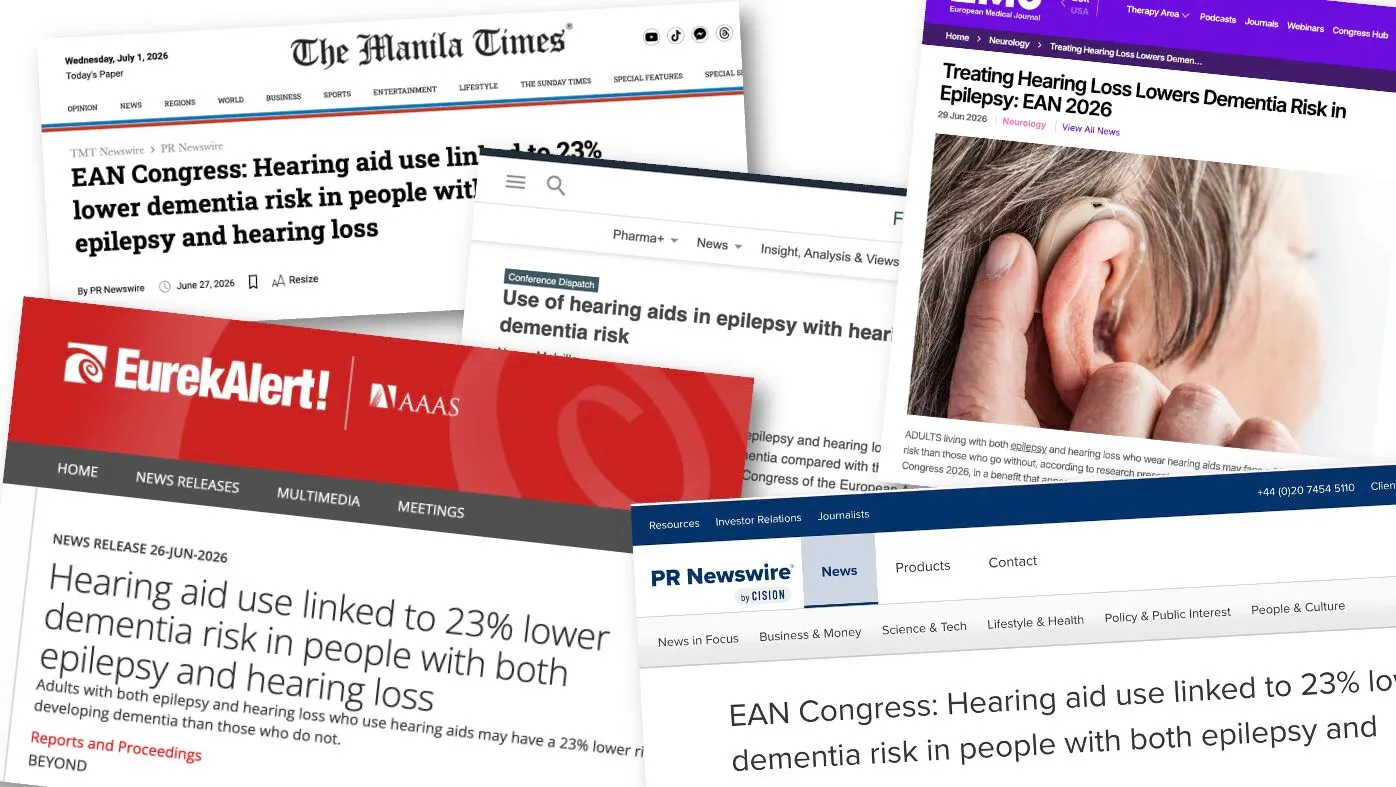
Our HEARD pilot went around the world.
Presented at EAN 2026 in Geneva, the finding that hearing aids may lower dementia risk in people with epilepsy was picked up across the globe, from Epilepsy Action to the Manila Times.
Our work on this topic.
Sodium channel blockers and dementia risk (AMBROSE)
Across a federated dataset of over 185 million patients, sodium channel blocking ASMs were associated with a 27% lower risk of dementia and 34% lower risk of Alzheimer’s disease, validated in independent cohorts.
Antiseizure medication, amyloid and tau (ASMAT)
ASM use was associated with lower amyloid on PET and with lower CSF amyloid and tau, concentrated in people with more advanced or hyperexcitable disease.
Hearing aids and dementia in epilepsy (HEARD)
In people with epilepsy and hearing loss, hearing-aid use was linked to a 23% lower dementia risk. Pilot results presented at EAN 2026 in Geneva and covered around the world.
This is a fast-moving area and much of our work is still under review or in preparation. We are actively building more, so stay tuned.